Posts in Astro Physics
JWST finds distant galaxy with “impossible” light signatureed
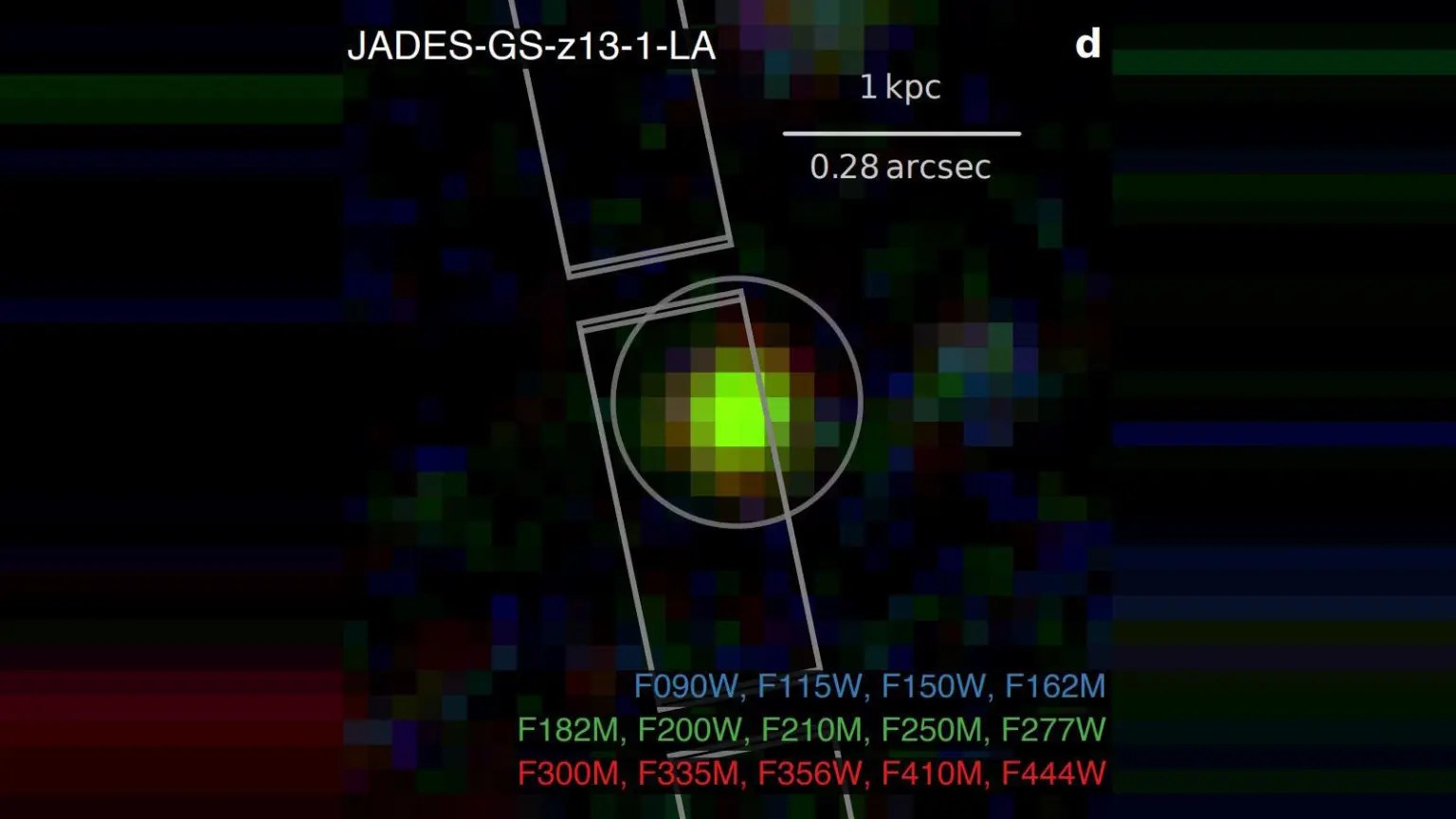
Since its launch in December of 2021, the James Webb Space Telescope (JWST) has spotted record-setting objects all across the Universe, including at the greatest distances ever seen. Many distant galaxies are energetic, and show signatures of emission lines from specific atoms and molecules, particularly hydrogen. However, the Lyman-α line has never been seen earlier than 550 million years after the Big Bang. Until now. With the discovery and spectroscopic follow-up on galaxy JADES-GS-z13-1-LA, we now have strong evidence for that emission line from a galaxy just 326 million years after the Big Bang. The question is: how? ...
[Read More]
Intergalactic 'stream of stars' 10 times longer than the Milky Way is the 1st of its kind ever spotted
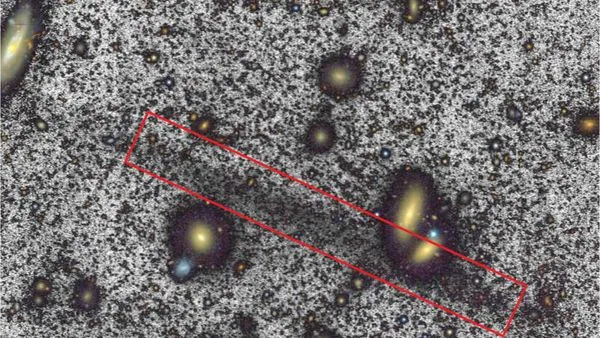
Astronomers have accidentally discovered the first known intergalactic trail of stars. The gigantic "stellar stream," which is around 10 times longer than the Milky Way, suggests that more of these structures could be lurking in deep space, a new study reveals. Stellar streams are elongated threads of gravitationally entwined stars that have likely been ripped away from their parent galaxies or nebulas by the gravitational pull of other nearby galaxies. Scientists have mapped dozens of these streams within galaxies, including the Milky Way. But until now, none had been discovered in intergalactic space, meaning the space between galaxies. In the study, which was published Nov. 30 in the journal Astronomy & Astrophysics, the researchers identified and mapped the first-ever intergalactic stellar stream, which stretches through the Coma Cluster, also known as Abell 1656, a group of more than 1,000 small galaxies located around 321 million light-years from Earth. The researchers named the first-of-its-kind structure the Giant Coma Stream — so named because it is also the largest stellar stream ever found. ...
[Read More]
SN 1987A for Chandra's 25th Anniversary
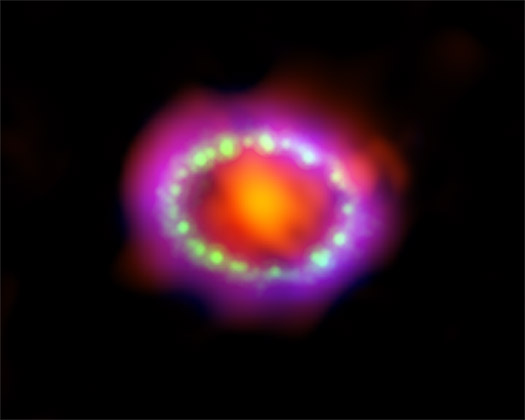
SN 1987A for Chandra's 25th Anniversary (Chandra/Webb/Hubble composite) The supernova explosion that created this object was first observed on Earth in February 1987. Chandra sees X-rays produced by debris from the explosion. X-rays from Chandra (purple); optical and infrared from Hubble (red, green, blue); infrared from Webb (red, green, and blue) Read more about Chandra's 25th anniversary: chandra.cfa.harvard.edu/photo/2024/25th/ Credit: X-ray: NASA/CXC/SAO; Optical/Infrared: NASA/ESA/STScI; Infrared: NASA/ESA/CSA/STScI; Image Processing: NASA/CXC/SAO/J. Major Visual Description: At the center of this composite image is a small object resembling a glowing pink Cheerio. This is supernova SN 1987A, named after the year the core-collapse explosion was first observed on Earth. It is located in the Large Magellanic Cloud, a small nearby galaxy. The pink Cheerio, or equatorial ring, represents material ejected tens of thousands of years before the supernova explosion. The blast wave from the supernova is striking the ring, causing it to produce X-rays detected by Chandra. Inside this ring is a pale, steel blue dot containing debris from the star that exploded.. The ring sits at the center of a ghostly figure 8, outlined in brick orange. This entire structure is surrounded by a packed field of stars, specks and dots in white, blue, and orange. A long, brick orange cloud hovers near the left edge of the image. ...
[Read More]
Star-packed Triangulum Galaxy shines in new Hubble Telescope image
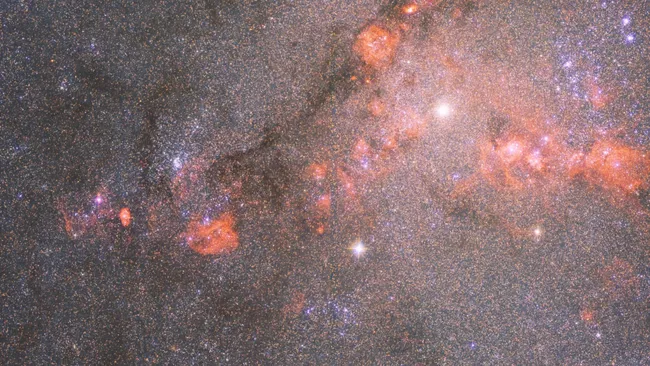
A nearby galaxy is shining with star formation in a new image from the Hubble Space Telescope. The spiral galaxy Messier 33 (M33), also known as the Triangulum Galaxy, is the third-largest member of the Local Group of galaxies, after the Andromeda galaxy (M31) and our own Milky Way. Measuring only 60,000 light-years across, M33 is about half the size of the Milky Way. Located nearly 3 million light years from Earth, the Triangulum Galaxy is regarded as a "hotbed of starbirth," forming stars at a rate 10 times higher than the neighboring Andromeda galaxy, according to a statement from NASA. "Interestingly, M33's neat, organized spiral arms indicate little interaction with other galaxies, so its rapid starbirth is not fueled by galactic collision, as in many other galaxies," NASA officials said in the statement. Instead, new stars are born from ample amounts of dust and gas within the galaxy. Collisions between massive ionized hydrogen clouds, known as H-II regions, create high-mass stars, which can be seen in the new Hubble image. The large reddish clouds in the Hubble photo represent the pockets of ionized hydrogen, which, along with the dark streams of gas, fuel the galaxy's rapid star formation. Related: The best Hubble Space Telescope images of all time! "The apparent graininess of the image is actually swarms of countless stars," NASA officials said in the statement. "M33 is one of less than 100 galaxies close enough for telescopes like Hubble to resolve individual stars, as evident here." ...
[Read More]