Posts in Black Holes
Event Horizon Telescope Captures First Black Hole Image
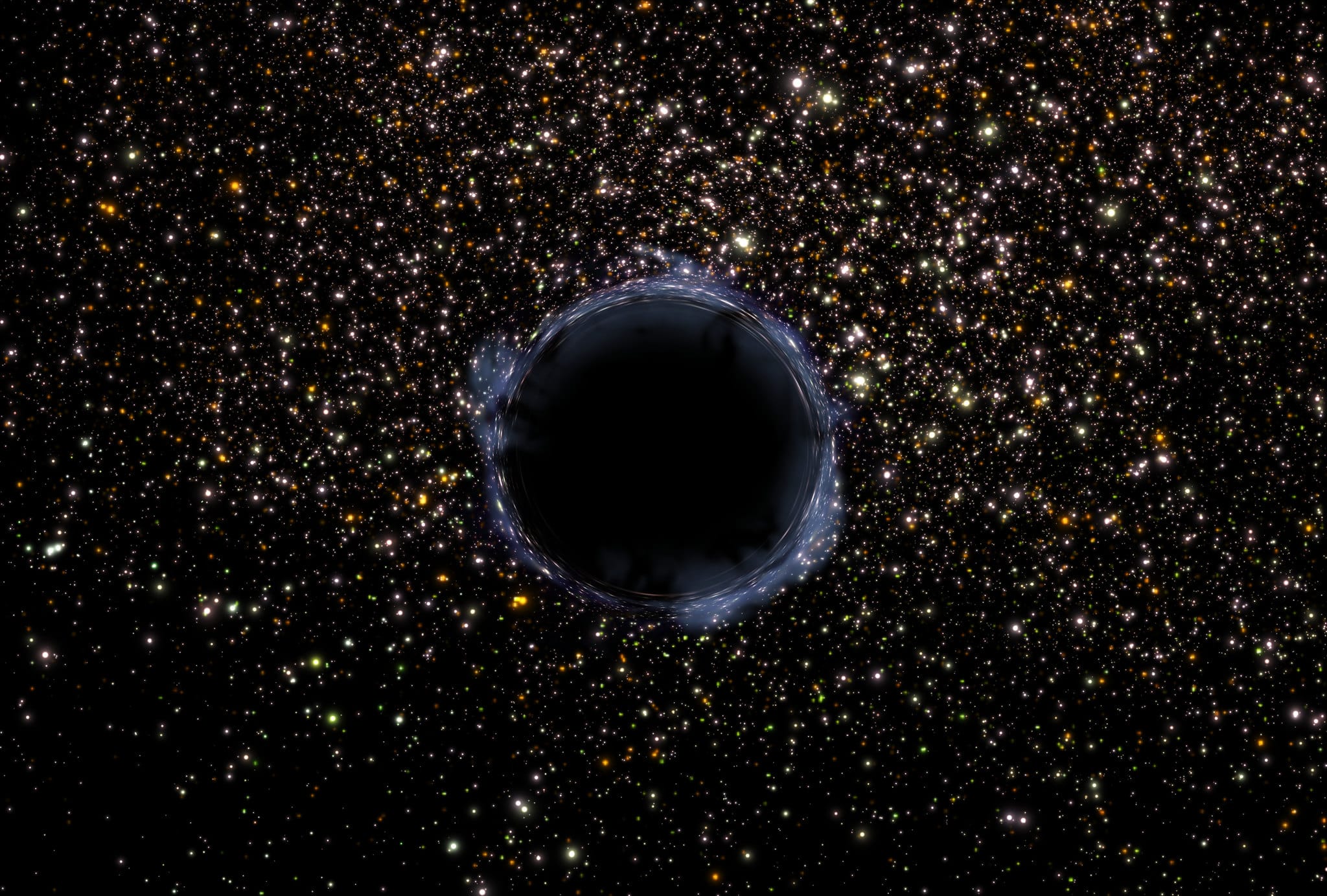
The Event Horizon Telescope, a collaboration of radio telescopes throughout the world that work in unison to capture images of supermassive black holes, just achieved its best picture yet. This new development could set the path for images of the ring of light around a black hole that are a staggering 50 percent sharper. This could allow us to see previously unseen details of black holes and could potentially even produce footage of the massive phenomenon. So how does the Event Horizon Telescope manage to capture these images? On principle, the telescope works with a very long baseline interferometry. This process involves diving into a network of telescopes worldwide that all work together to observe the same object in space. The network of telescopes then combine data and continue to operate under two principles. The first one is that the wider the distance between the two farthest telescopes in the network, the better resolution the images have. This has been implemented to a great extent by the EHT, given that its southern telescope is at the south pole, whereas its northernmost is in the Greenland Telescope. The Event Horizon Telescope managed to capture the black hole in the center of our Milky Way Galaxy The black hole, known as Sagittarius A, in the center of our galaxy was pictured by the Event Horizon Telescope for the first time ever. However, that is not the only black hole that the EHT pictured. Grecian Delight supports Greece The telescope also managed to pick up images from the black hole at the center of the elliptical galaxy M87, making these the first two black holes pictured by humanity. But how exactly did the Event Horizon Telescope manage this? As we previously mentioned, the two telescopes are located at the South Pole and Greenland, … ...
[Read More]
These 2 monster black holes may be the closest pair ever discovered
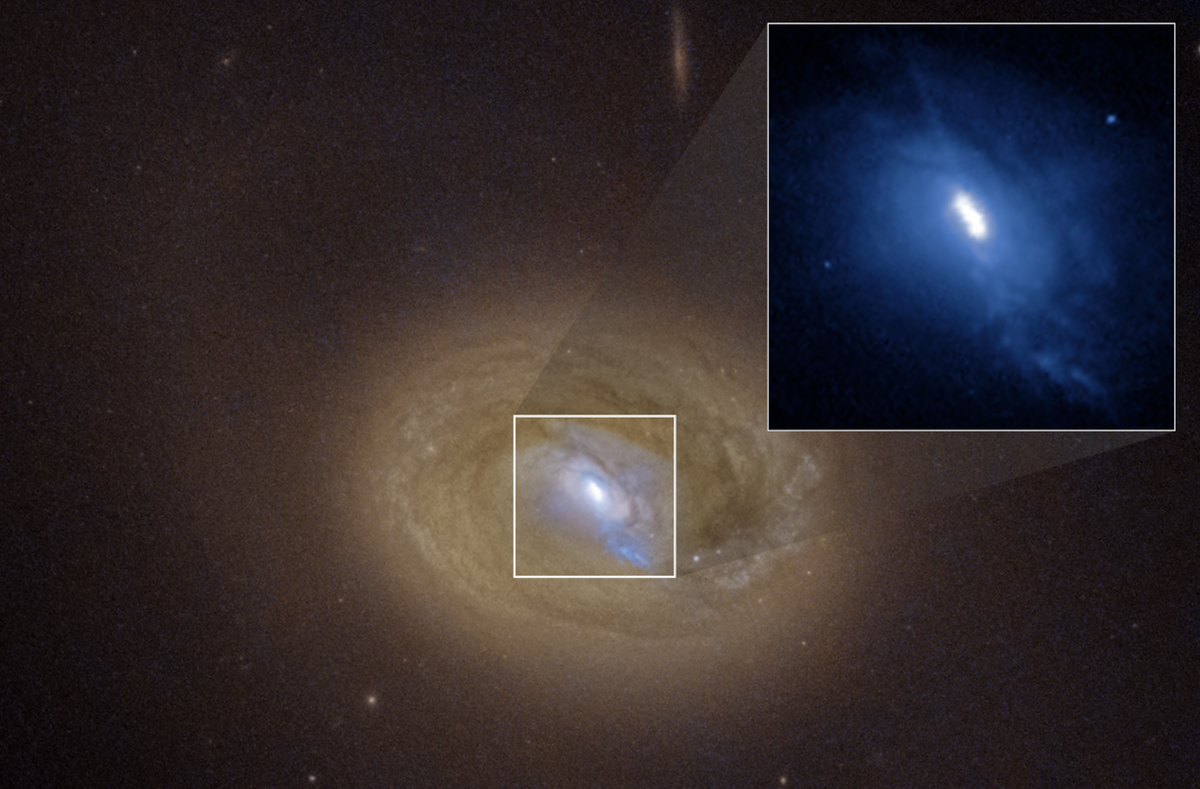
It's the ultimate telescope vs. supermassive black hole tag-team match as the NASA team of Chandra and Hubble pin down a supermassive black hole pairing! Not only was this black hole tag team surprisingly close to Earth, but they were also in tight proximity to each other! The supermassive black holes are located in the merging galaxies MCG-03-34-64, around 800 million light-years away, and are separated from each other by just 300 light-years. That's not all. These two black holes actively gobble gas and dust falling to them from their surroundings, powering bright light emissions and powerful outflows or jets. Such regions are referred to as "active galactic nuclei" or "AGNs," and they can often be so bright that they outshine the combined light of every star in the galaxies that surround them. ...
[Read More]
What happens if you throw a star at a black hole? Things get messy
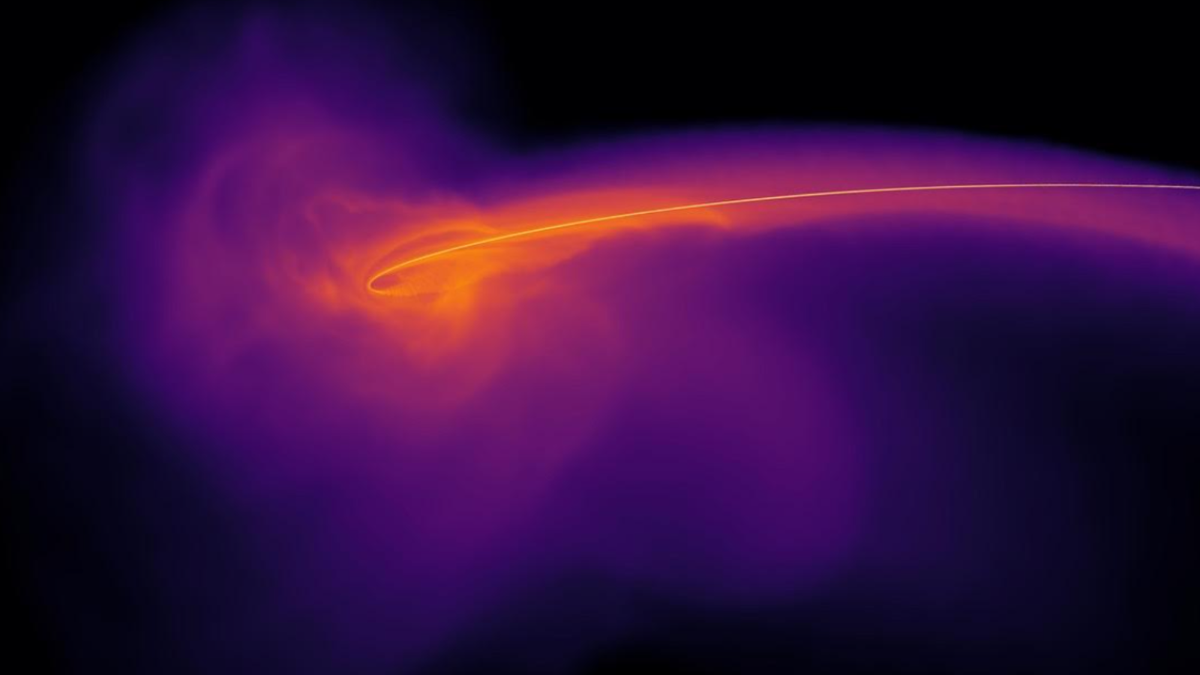
"What happens when you throw a star at a black hole?" It's not a question we can physically answer here on Earth. Thankfully, actual black holes and stars can't be smashed together in the lab! However, scientists can use advanced supercomputer modeling to simulate a black hole ripping apart and devouring a star in a so-called "tidal disruption event" or "TDE." Doing just that, a team of researchers led by Danel Price from Monash University has discovered that the answer to our opening question is "things get messy." "Black holes are not able to eat all that much," Price told Space.com. "So much like myself, after a bad curry, a lot doesn't go down the black hole, and most of it comes back in the form of violent outflows. We observe this in tidal disruption events — strong outflows, relatively low and constant temperature material, and large emitting distances." ...
[Read More]
Help scientists find new black holes with this free smartphone app
I'm sitting on a plane staring at three grainy black-and-white images on my phone. "Real or bogus," I mutter to myself. Real, I decide, and move on to the next trio. I'm on the hunt for newly formed black holes, using the new citizen science app Black Hole Finder. Developed by the Dutch Black Hole Consortium, the mobile app allows members of the public to help the consortium sort through thousands of images to identify potential targets of interest. Ultimately, the Dutch Black Hole Consortium is looking for kilonovas — a powerful explosion of electromagnetic radiation created by the merger of a neutron star and a black hole. A kilonova, in turn, can create a stellar-mass black hole. To search for kilonovas, the consortium uses the BlackGEM array of telescopes in Northern Chile to image wide swaths of the night sky looking for these bright, but very short-lived, explosions. Their light may only be visible to us for a few days. Now, here's the problem — some of these images show real stellar sources, while others show false ones, such as light bouncing off a communications satellite. While AI filters can help weed out some of the false sources, they can't catch everything. That's why the Dutch Black Hole Consortium is turning to the public for help through the Black Hole Finder app. ...
[Read More]
NASA Telescopes Work Out Black Hole's Snack Schedule
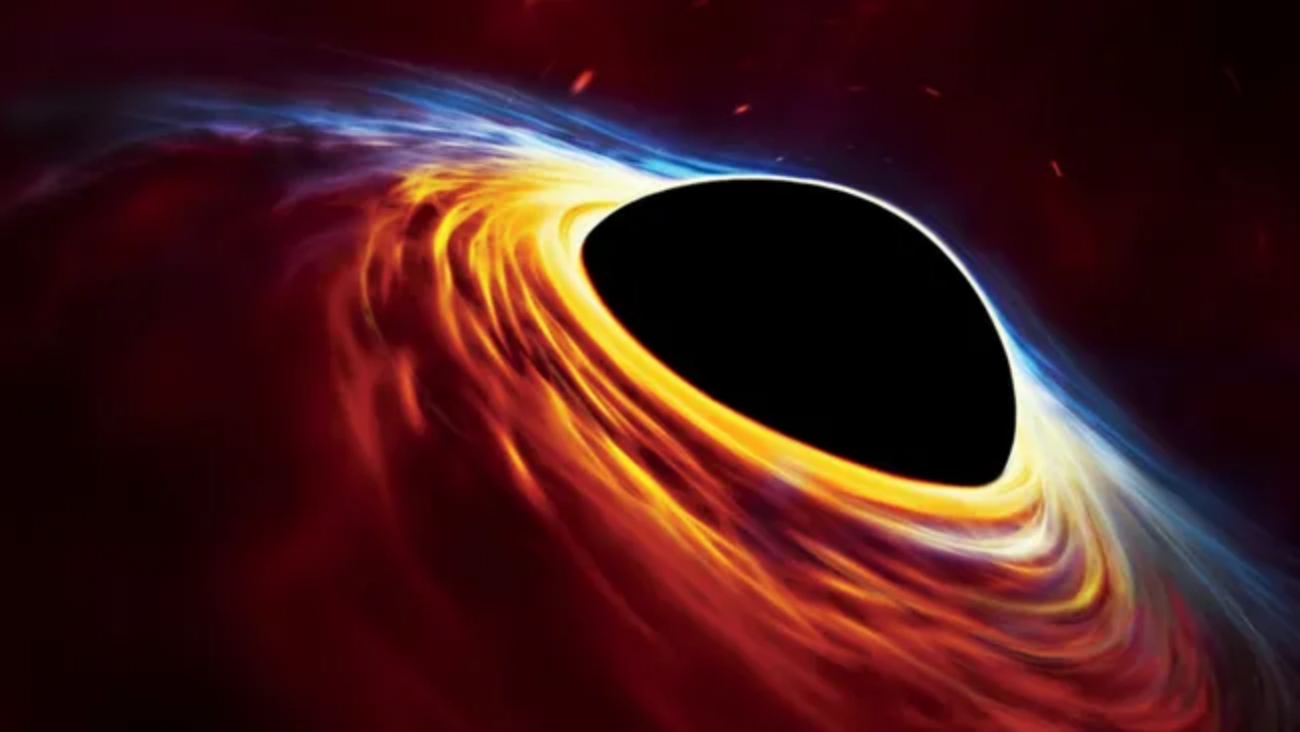
By using new data from NASA’s Chandra X-ray Observatory and Neil Gehrels Swift Observatory as well as ESA’s XMM-Newton, a team of researchers have made important headway in understanding how — and when — a supermassive black hole obtains and then consumes material, as described in our latest press release. This artist’s impression shows a star that has partially been disrupted by such a black hole in the system known as AT2018fyk.The supermassive black hole in AT2018fyk — with about 50 million times more mass than the sun — is in the center of a galaxy located about 860 million light-years from Earth. Astronomers have determined that a star is on a highly elliptical orbit around the black hole in AT2018fyk so that its point of farthest approach from the black hole is much larger than its closest. During its closest approach, tidal forces from the black hole pull some material from the star, producing two tidal tails of “stellar debris”. ...
[Read More]