Posts in Solar System
NASA's Voyager 1 probe swaps thrusters in tricky fix as it flies through interstellar space
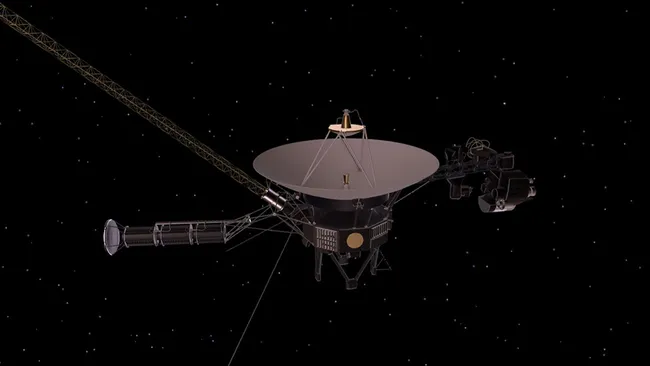
The distant and cold Voyager 1 spacecraft did a clever thruster trick to help it phone home. Voyager 1, the most distant human object that is now flying through interstellar space, had thruster issues making it difficult for the spacecraft to stay pointed at Earth when calling home. Unless Voyager 1 could make a switch to a different thruster set, the 47-year-old spacecraft would sail on alone without help from Earth. Making matters worse, Voyager 1 is so old that sudden changes could damage the spacecraft. "All the decisions we will have to make going forward are going to require a lot more analysis and caution than they once did," Suzanne Dodd, Voyager's project manager at NASA's Jet Propulsion Laboratory that manages the mission, said in a statement on Tuesday (Sept. 10). The science of Voyager 1 is critical to space science as it tells us more about interstellar space, meaning the region of the cosmos outside of the reach of the sun's gravity or particles. But the spacecraft's aging nuclear power source is much diminished, and doesn't have much power to play with. So engineers at JPL embarked on a rescue plan to help the spacecraft's pointing capabilities without risking its remaining functional science instruments. Voyager 1 and its twin, Voyager 2, launched on their initial missions in 1977 to study the distant solar system. They collectively flew by four largest outer solar system planets by 1989 and continue, with tweaks for their age, to send science from afar even after both exited the solar system in the early 2010s. ...
[Read More]
SpaceX will start launching Starships to Mars in 2026, Elon Musk says

SpaceX's Starship megarocket will start flying Mars missions just two years from now, if all goes according to plan. "These will be uncrewed to test the reliability of landing intact on Mars. If those landings go well, then the first crewed flights to Mars will be in 4 years," SpaceX founder and CEO Elon Musk said via X on Saturday evening (Sept. 7), in a post that announced the bold new target timelines. (Earth and Mars align properly for interplanetary missions once every 26 months.) "Flight rate will grow exponentially from there, with the goal of building a self-sustaining city in about 20 years," Musk added in the same post. "Being multiplanetary will vastly increase the probable lifespan of consciousness, as we will no longer have all our eggs, literally and metabolically, on one planet." ...
[Read More]
Have astronomers found the 'secret recipe' for rapid planet growth?
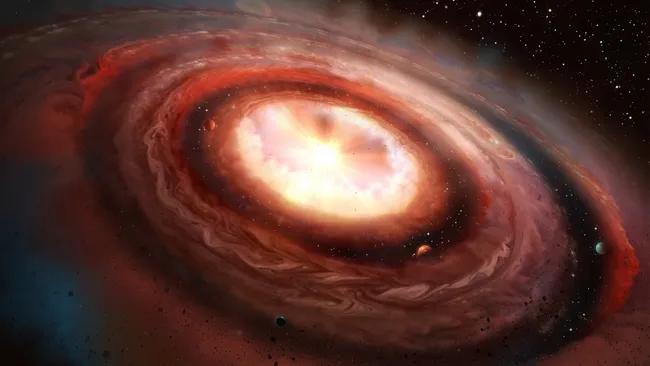
Researchers may have discovered the secret ingredient of planet growth, which causes some worlds to grow rapidly in disks of gas and dust around infant stars. The model could be of specific value in understanding the growth of the solar system's giant planets. Scientists have a fairly good understanding of how the rocky inner planets of the solar system, Mercury, Venus, Earth and Mars, formed and evolved. But the current model of collisions and gathering of asteroid-like bodies called "planetesimals" and the accretion of gas over millions of years leaves a lot to be explained when it comes to the formation of the gas giants Jupiter and Saturn and the ice giants Neptune and Uranus. All these giants seem to have formed too far out from the sun to grow so massive, with the growth of the outer ice giants being particularly puzzling. Jupiter is 15 times further away from the sun than our planet, and Neptune is 30 times farther away from our star than Earth. ...
[Read More]
Venus facts: Everything you need to know about the 2nd planet from the sun
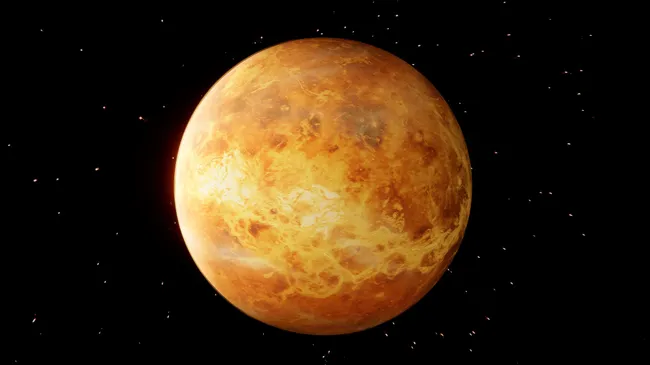
Venus, the second planet from the sun, is the hottest and brightest planet in the solar system. The scorching terrestrial (rocky) type planet is named after the Roman goddess of love and beauty and is the only solar system planet named after a female when following the International Astronomical Union designation of names that the astronomy community uses as a convention. (Other cultures have different names for celestial locations.) Venus may have been named after the most beautiful deity of the Roman (and Greek) pantheons because it shone the brightest among the five planets known to ancient astronomers. In ancient Greek city-states, however, Venus was called Aphrodite. ...
[Read More]
Once-in-a-lifetime' photo: Perseid meteors, northern lights and rare glowing arc shine over 11th-century castle
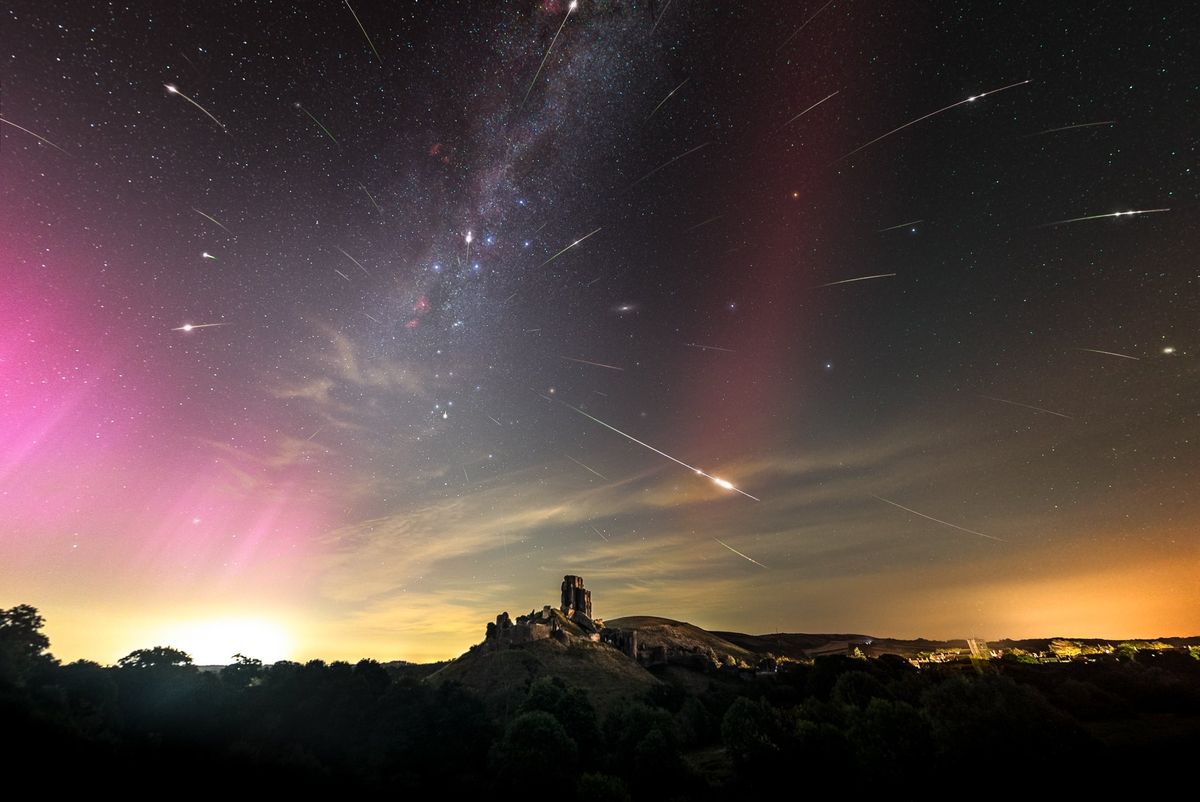
When photographer Josh Dury set out to photograph the peak of the Perseid meteor shower overnight on Aug. 12 and Aug. 13, little did he know he'd be treated to a truly special cosmic display. The breathtaking image Dury captured shows not only Perseid meteors raining down through the sky but also northern lights and a rare atmospheric glow known as an SAR arc alongside the Andromeda and Triangulum galaxies. "To think that so much is going on in the astronomical scene that evening with the Andromeda and Triangulum galaxies also visible, makes this definitely a once-in-a-lifetime photograph," Dury told Space.com in an email. ...
[Read More]