Latest Posts
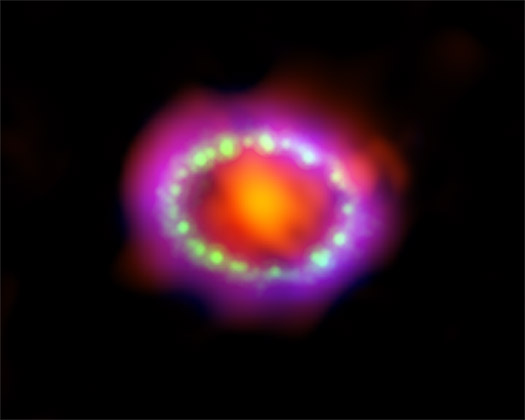
SN 1987A for Chandra's 25th Anniversary
SN 1987A for Chandra's 25th Anniversary (Chandra/Webb/Hubble composite) The supernova explosion that created this object was first observed on Earth in February 1987. Chandra sees X-rays produced by debris from the explosion. X-rays from Chandra (purple); optical and infrared from Hubble (red, green, blue); infrared from Webb (red, green, and blue) ...
[Read more]
[Read more]
Posted: Sept. 6, 2024 Category: Astro Physics By: Draine, Bruce
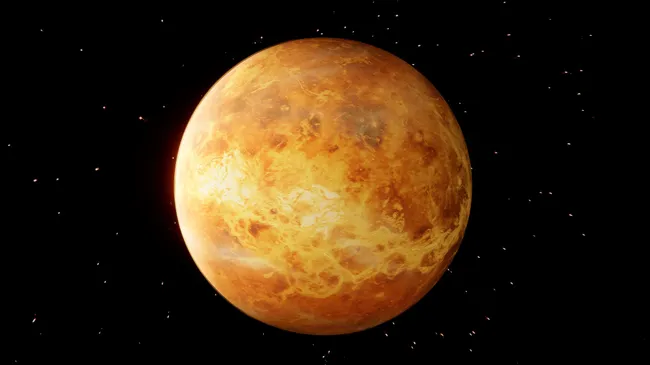
Venus facts: Everything you need to know about the 2nd planet from the sun
Venus, the second planet from the sun, is the hottest and brightest planet in the solar system.
The scorching terrestrial (rocky) type planet is named after the Roman goddess of love and beauty and is the only solar system planet named after a female when following the International Astronomical Union designation of names that the astronomy com ...
[Read more]
[Read more]
Posted: Sept. 6, 2024 Category: Solar System By: Q. Choi, Charles
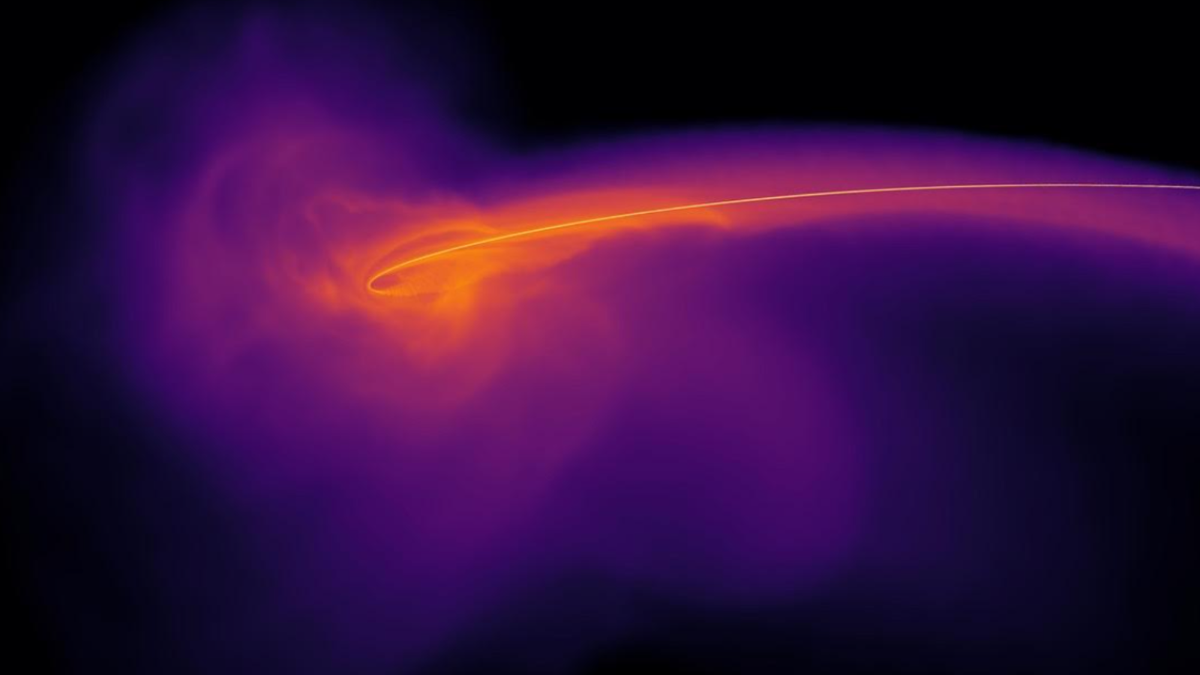
What happens if you throw a star at a black hole? Things get messy
"What happens when you throw a star at a black hole?" It's not a question we can physically answer here on Earth.
Thankfully, actual black holes and stars can't be smashed together in the lab! However, scientists can use advanced supercomputer modeling to simulate a black hole ripping apart and devouring a star in a so-called "tidal disruption ...
[Read more]
[Read more]
Posted: Sept. 6, 2024 Category: Black Holes By: Lea, Robert
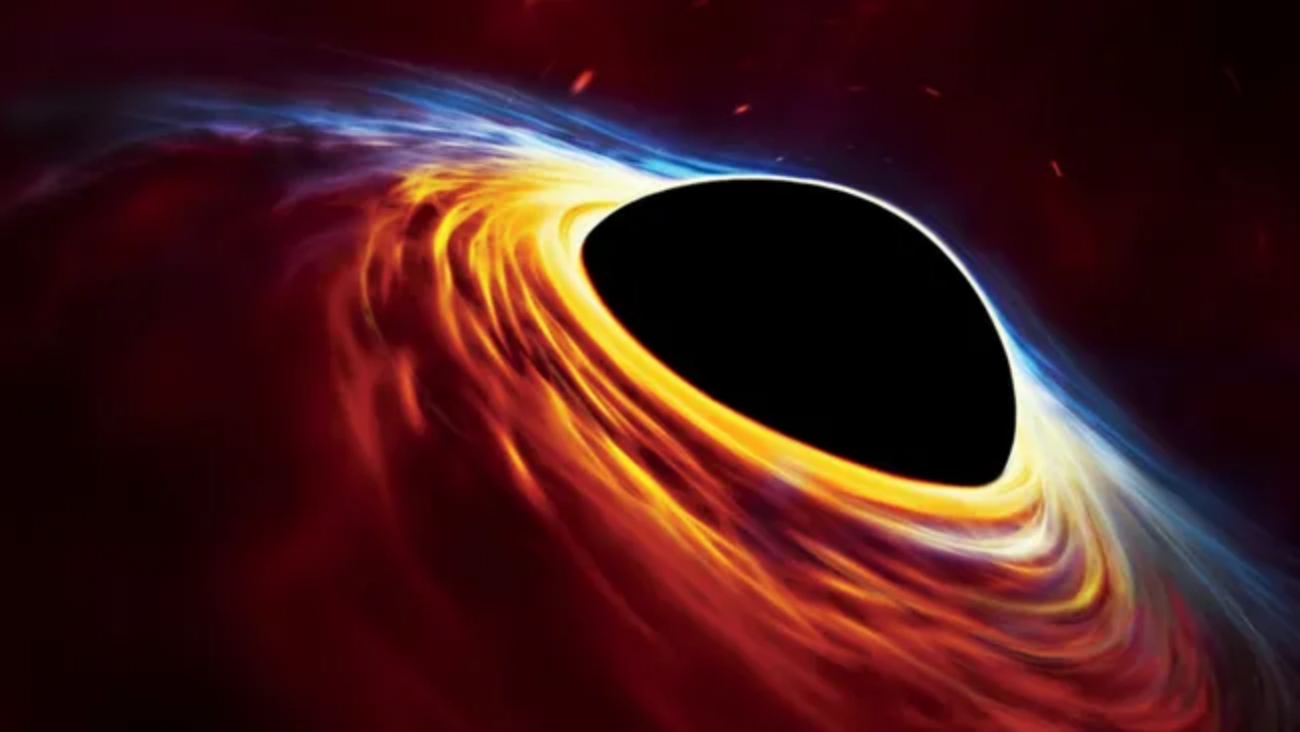
NASA Telescopes Work Out Black Hole's Snack Schedule
By using new data from NASA’s Chandra X-ray Observatory and Neil Gehrels Swift Observatory as well as ESA’s XMM-Newton, a team of researchers have made important headway in understanding how — and when — a supermassive black hole obtains and then consumes material, as described in our latest press release. This artist’s impression shows a star that ...
[Read more]
[Read more]
Posted: Sept. 5, 2024 Category: Black Holes By: Vanelslande, Filip
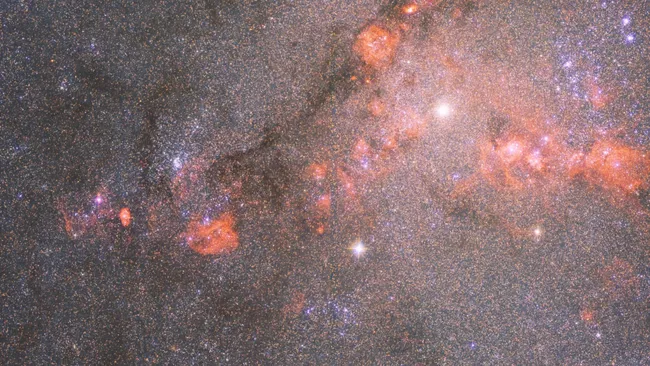
Star-packed Triangulum Galaxy shines in new Hubble Telescope image
A nearby galaxy is shining with star formation in a new image from the Hubble Space Telescope. The spiral galaxy Messier 33 (M33), also known as the Triangulum Galaxy, is the third-largest member of the Local Group of galaxies, after the Andromeda galaxy (M31) and our own Milky Way. Measuring only 60,000 light-years across, M33 is about half the si ...
[Read more]
[Read more]
Posted: Sept. 5, 2024 Category: Astro Physics By: Friedman, Lou